Unannounced and Unfiltered: What Surprise Security Audits Reveal About the Protection You're Actually Receiving
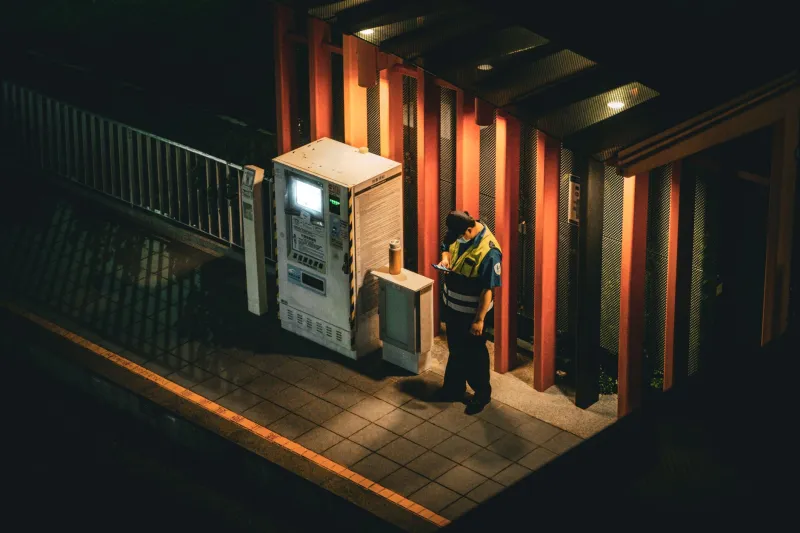
There is a version of your security operation that exists on paper, in training manuals, and in the polished presentations delivered during quarterly reviews. Then there is the version that exists at 2:47 on a Tuesday morning, when the facility is quiet, the supervisors are off-site, and the guards on duty have every reason to believe no one is paying attention.
Those two versions are not always the same.
For businesses that invest meaningfully in physical security—whether through contracted guard services, in-house personnel, or a combination of both—the gap between prescribed protocol and real-world execution is one of the most consequential vulnerabilities they face. Scheduled assessments and predictable oversight cycles, while useful for documentation purposes, rarely surface this gap. Unannounced inspections do.
Why Predictable Oversight Produces Predictable Results
Human behavior responds to observation. This is not a cynical observation—it is a documented psychological reality with practical implications for security management. When guards know that a supervisor will conduct a walkthrough at a specific time, or that a performance review is scheduled for the end of the month, their behavior naturally aligns with that expectation. Rounds get completed on schedule. Post orders get reviewed. The logbook entries are thorough and timely.
The problem is that security threats do not operate on a schedule. Intrusions, thefts, and safety incidents occur precisely during the windows when vigilance is most likely to have softened—late-night hours, weekend shifts, holiday periods, and the stretches of time between predictable check-ins. If a security program is only evaluated during its most performance-ready moments, the business never gets an accurate picture of how that program actually functions under ordinary, unobserved conditions.
Scheduled reviews measure compliance with the inspection itself. Unannounced audits measure the underlying culture of the operation.
What Surprise Inspections Consistently Uncover
Organizations that implement regular unannounced assessment programs tend to discover patterns that would never surface through conventional oversight. Some of the most common findings include:
Abbreviated patrol routes. Guards assigned to cover specific areas of a facility often develop informal shortcuts over time—particularly during overnight shifts when foot traffic is low and the likelihood of being observed is minimal. What begins as a minor deviation from the prescribed route can evolve into a routine that leaves entire sections of a property effectively unmonitored for extended periods.
Delayed or fabricated log entries. Security logs serve as both an operational record and a legal document. When inspectors arrive unannounced and compare log timestamps against access control data, camera footage, or other verifiable records, discrepancies frequently emerge. Entries recorded as contemporaneous are sometimes reconstructed after the fact—a practice that undermines the evidentiary value of the entire documentation system.
Unauthorized use of personal devices. Distracted guarding is a growing concern across the industry. Unannounced inspections that catch personnel actively engaged with personal phones or tablets during active patrol periods reveal an attention deficit that no incident report will ever document—because the incidents that result from distraction tend to be the ones that never get detected at all.
Unsecured access points. Doors that are supposed to remain locked, gates that should be closed after hours, and access control systems that require active monitoring are sometimes found in states that directly contradict the written protocol. These are not always the result of negligence—equipment malfunctions, key management failures, and miscommunication between shifts all contribute—but they are conditions that only a surprise inspection is likely to catch before they are exploited.
Unoccupied posts. Perhaps the most direct finding of all: guards who are simply not where they are supposed to be. Whether they have relocated to a more comfortable area of the facility, stepped outside, or are otherwise unavailable, an unoccupied post represents a complete breakdown of the protection model at that location.
The Management Dimension
It would be a mistake to frame the findings of surprise audits exclusively as a personnel problem. In many cases, what unannounced inspections reveal is not a failure of individual guards but a failure of the systems and culture surrounding them.
Guards who are inadequately supervised, poorly compensated, insufficiently trained, or assigned to posts that are structurally unmanageable will eventually adapt in ways that serve their own sustainability rather than the client's security objectives. Long shifts with no meaningful supervision, post orders that are outdated or unrealistic, and management that only engages with personnel during formal review cycles all create conditions in which corner-cutting becomes normalized.
This is why the most valuable outcome of a surprise inspection is not the identification of individual violations but the diagnosis of systemic patterns. A single guard sleeping at his post is a personnel issue. Three guards across different facilities and different shifts doing the same thing is an operational design problem—and it requires a fundamentally different response.
Building an Effective Unannounced Audit Program
For businesses seeking to implement surprise inspection protocols, several principles tend to determine whether the program produces actionable intelligence or merely creates resentment without results.
Vary the timing deliberately. The value of an unannounced inspection diminishes if personnel begin to anticipate it through pattern recognition. Effective programs distribute surprise audits across all shift types, days of the week, and seasons of the year—with particular attention to the high-risk windows that scheduled reviews never reach.
Separate the audit function from the supervisory chain. Inspections conducted by the direct supervisor of the guards being assessed are subject to relationship dynamics that can distort findings. Wherever possible, audit functions should involve personnel who are organizationally independent from the team under review.
Document findings with specificity. Vague assessments produce vague improvements. Effective audit reports identify the specific location, time, personnel involved, and nature of each finding—creating a record that can be compared across multiple inspection cycles to determine whether conditions are improving, stable, or deteriorating.
Treat findings as diagnostic, not merely disciplinary. Organizations that respond to audit findings exclusively through punitive measures tend to drive non-compliance underground rather than eliminate it. The most durable improvements come from programs that use inspection data to redesign post orders, adjust staffing levels, update training content, and address the operational conditions that make corner-cutting attractive in the first place.
The Standard Your Security Program Should Actually Meet
Every business that employs security personnel is, in effect, making a wager: that the protection those personnel provide is real, consistent, and sufficient to meet the threats the facility actually faces. Scheduled reviews and incident-free months are not sufficient evidence to win that wager. They are simply evidence that nothing has gone wrong yet—or that what has gone wrong has not yet been discovered.
Unannounced inspections are the mechanism through which organizations close the gap between assumption and reality. They are not an expression of distrust toward security personnel. They are an expression of seriousness about the protection the business has committed to maintaining.
At Alert Guarding Force, we believe that accountability is not the enemy of professional security—it is the foundation of it. The organizations that know exactly what their security program looks like at its least-observed moments are the ones that can say, with genuine confidence, that they are protected.