Silenced by Volume: How Alert Overload Is Quietly Dismantling Your Security Response Capability
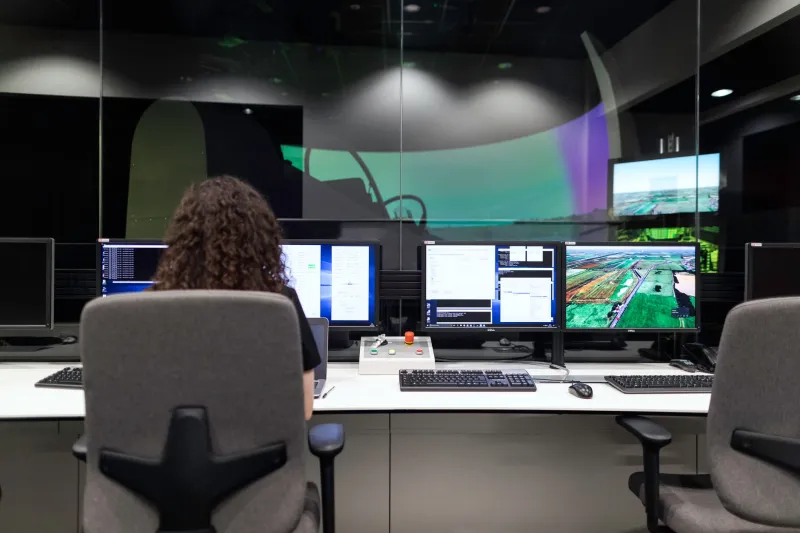
There is a particular kind of danger that does not announce itself with urgency. It accumulates quietly, notification by notification, until the very systems designed to protect your facility have trained your personnel to ignore them. Alert fatigue is not a technology failure. It is an organizational one—and it is far more common across American businesses than most security directors are prepared to acknowledge.
When a motion sensor triggers for the fortieth time in a single shift, when access control panels flag credential anomalies that have never once corresponded to an actual breach, when cameras generate movement alerts every time a maintenance vehicle passes the perimeter, something corrosive happens to the human beings responsible for responding. They stop treating alerts as signals. They begin treating them as background noise. And the moment that transition occurs, your entire security architecture is compromised—not because the technology failed, but because the human link in the chain has been conditioned out of its function.
The Anatomy of Alert Fatigue
Alert fatigue is not a phenomenon unique to security operations. Medical professionals, air traffic controllers, and financial compliance teams have all grappled with versions of the same problem. But in a security context, the consequences are particularly unforgiving. A physician who overlooks a low-priority notification may catch the issue at the next review. A security officer who dismisses an alert during the window when it matters most may be enabling an intrusion, a theft, or something far worse.
The condition develops through a predictable sequence. First, a security system is deployed—often with good intentions—and configured to capture every conceivable anomaly. Then, the volume of alerts begins to exceed the capacity of personnel to investigate each one thoroughly. Response times lengthen. False positives accumulate without consequence. Officers learn, through repetition, that most alerts resolve themselves or were never genuine to begin with. Eventually, the psychological cost of sustained vigilance outweighs the perceived benefit of investigation, and alerts begin going unacknowledged entirely.
What makes this progression so dangerous is how invisible it is to those observing from outside the operation. The monitors are still active. The notifications are still being generated. On paper, the system is functioning. In practice, it has become theater.
When the Ignored Alert Is the Real One
Consider the pattern that has emerged in post-incident analyses across multiple industries: in a significant number of cases where security breaches or unauthorized access events occurred, the relevant alert had in fact been generated—and had gone uninvestigated. The system performed its function. The response chain did not.
This is the scenario that should concern every business owner and security manager in the United States. An investment in surveillance infrastructure, access control technology, or perimeter detection is only as valuable as the human response it is designed to trigger. If the notification architecture has been allowed to deteriorate into a system that personnel have learned to disregard, then the organization has spent considerable resources to create the appearance of security rather than the substance of it.
The financial exposure is substantial. Beyond the direct costs of whatever incident results from an ignored alert—theft, vandalism, unauthorized access to sensitive areas—businesses face potential liability when it can be demonstrated that a protective system was in place and its outputs were not acted upon. In litigation, the existence of an alert that went unaddressed is not a neutral fact. It is evidence of negligence.
Diagnosing the Problem Before Designing the Solution
Remedying alert fatigue requires an honest assessment of how the current notification environment came to exist. In most cases, the root cause is not malicious neglect but structural misalignment between what the technology is capable of generating and what the security team is capable of processing.
A rigorous audit should examine several dimensions. First, the raw volume: how many alerts are generated per shift, per officer, per monitored zone? If those numbers are not tracked, they should be. Second, the false positive rate: what percentage of alerts, when investigated, correspond to no meaningful security event? Systems operating above a twenty percent false positive threshold are actively training personnel toward dismissiveness. Third, the escalation clarity: when an alert is received, does the officer know precisely what action is expected, within what timeframe, and what authority they have to escalate?
In many operations, the answer to that last question is ambiguous—and ambiguity, under pressure, defaults to inaction.
Building an Alert Architecture That Commands Attention
The goal of alert system redesign is not to reduce the sensitivity of detection. It is to ensure that every alert delivered to a human being carries genuine informational value and a clear response expectation.
Several principles guide this work. Tiered classification is foundational. Not every alert warrants the same urgency, and systems that treat a propped-open emergency exit with the same visual priority as a motion sensor activation in a low-traffic corridor are contributing to the desensitization problem. Alerts should be categorized by threat level, and that categorization should be immediately legible to the officer receiving it—through color coding, audio differentiation, or dedicated display channels.
Response protocol specificity is equally important. Every alert category should have a corresponding written protocol that eliminates ambiguity. Officers should not be required to exercise judgment about whether an alert warrants investigation; that judgment should already be encoded in the protocol. What they should be exercising is the execution of a defined procedure.
Accountability logging closes the loop. When alerts are generated and response actions are recorded in a timestamped system, patterns become visible. Supervisors can identify which alert types are consistently going unaddressed, which shifts demonstrate the longest response lag, and which zones generate disproportionate false positives. Without this data, the problem remains invisible.
Finally, regular calibration reviews prevent the system from drifting back into noise. Sensitivity thresholds, alert classifications, and response protocols should be reviewed on a quarterly basis at minimum—and adjusted based on actual performance data rather than assumptions.
The Human Factor Cannot Be Engineered Away
Technology improvements will reduce the volume of irrelevant alerts. Better protocols will clarify the expected response. But neither of these interventions addresses the fundamental reality that security operations depend on human beings who must sustain vigilance across long shifts, through periods of apparent calm, in environments that may not reward their alertness with visible results.
This is where personnel culture matters as much as system design. Officers who understand the operational significance of their response function—who have been shown, through training and leadership communication, how ignored alerts have contributed to real incidents—are better equipped to resist the psychological pull toward dismissiveness. Vigilance is not an instinct. It is a professional discipline, and it must be cultivated deliberately.
At Alert Guarding Force, the integration of sound alert architecture with trained, attentive personnel is central to how we approach protection for the clients we serve. A notification that no one responds to is not a security measure. It is an open question waiting for an unwelcome answer.
The businesses that take that question seriously—before an incident forces the issue—are the ones that maintain genuine security rather than its appearance.