What the Camera Cannot See: The Irreplaceable Role of Human Judgment in Modern Security Operations

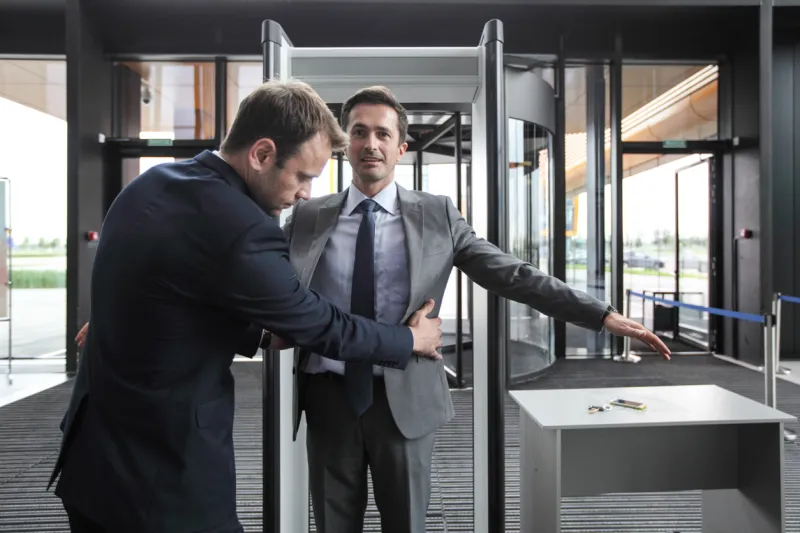
Photo by Photo by Qeis Ismail on Unsplash on Unsplash
The Limits of a Lens
There is a quiet confidence many business owners place in their surveillance infrastructure. A grid of high-definition cameras covering every entrance, exit, and corridor can feel like comprehensive protection. And in many respects, modern surveillance technology is genuinely impressive—wide-angle lenses, night vision, motion-triggered recording, and remote monitoring capabilities have raised the baseline for what a business can observe about its own premises.
But a camera records what is in front of it. It does not interpret what it sees.
That distinction is not a minor technical footnote. It is the difference between detecting a threat and preventing one. Professional security guards bring a dimension to protection that no surveillance system, however advanced, can replicate: the capacity to read context, recognize anomaly, and act with discretionary judgment in real time.
Behavioral Cues That Algorithms Cannot Decode
Trained security professionals are taught to observe people, not just monitor spaces. There is a meaningful difference between those two activities.
Consider a person who enters a retail environment and spends an unusual amount of time near a service entrance without purchasing anything. A camera captures their presence. A trained guard notices that their body language is inconsistent with browsing behavior—they are scanning the room rather than examining merchandise, their movements are deliberate rather than exploratory, and they appear to be timing something.
This is not a scenario that triggers an automated alert. There is no motion threshold crossed, no restricted zone breached. Yet an experienced guard recognizes the behavioral signature of pre-operational surveillance—someone mapping a location for a future act, whether theft, confrontation, or something more serious.
The same principle applies in corporate settings. A visitor who presents credentials at the front desk but lingers near restricted hallways, asks unusually specific questions about building layouts, or attempts to engage employees in conversations designed to extract operational information may pass every automated checkpoint without incident. A perceptive guard, trained in social engineering awareness, identifies the pattern.
Environmental Anomalies Beyond the Frame
Surveillance cameras are fixed or, in the case of PTZ systems, dependent on operator direction. They cover defined fields of view. But security threats rarely confine themselves to camera angles.
A door that should be fully latched but sits fractionally ajar. A vehicle parked in a service area with its engine running during off-hours. A smell—chemical, accelerant, or smoke—that signals a hazard before any visible evidence appears on screen. These are sensory inputs that no camera network captures, and they represent the kind of early-warning intelligence that prevents incidents rather than documents them.
Professional guards conducting structured patrols are specifically trained to notice environmental deviations from baseline conditions. They learn what a site looks and feels like under normal circumstances, which means they are positioned to recognize when something is subtly wrong—even when they cannot immediately articulate why. That instinct, developed through training and experience, has interrupted countless incidents before they escalated.
The Gap Between Recording and Responding
One of the most significant limitations of camera-only security models is temporal. Surveillance footage is, by definition, a record of what has already occurred. Even systems monitored in real time by remote operators carry inherent delays between observation and response—delays measured in minutes that, in a developing security situation, can determine outcome.
A guard on-site operates in the same time frame as the threat. When a confrontation begins in a parking structure, when an unauthorized individual attempts to force a secondary entrance, or when a medical emergency develops in a public-facing lobby, the presence of a trained security professional on location compresses the response window to seconds. That immediacy is not something any remote monitoring arrangement can replicate.
Furthermore, the visible presence of a uniformed security officer functions as a deterrent in ways that camera housings simply do not. Research consistently supports the conclusion that potential bad actors assess the risk of detection and intervention before committing an act. A camera suggests the possibility of being recorded. A guard represents the certainty of being confronted.
Nuanced Situations Require Human Discretion
Not every security situation is a clear-cut emergency. Many of the most consequential moments in a guard's workday involve ambiguity: a distressed individual who may need assistance or may pose a risk, a disagreement between employees that could remain verbal or could escalate, a contractor whose credentials appear legitimate but whose behavior raises questions.
Automated systems are not equipped to navigate ambiguity. They operate on binary logic—threshold met or threshold not met, alert triggered or alert not triggered. Human security professionals exercise judgment. They de-escalate when appropriate, involve law enforcement when necessary, offer assistance when warranted, and document what they observe with the nuance that a situation requires.
This capacity for contextual reasoning is not incidental to security operations—it is central to them. The ability to respond proportionately, to communicate with individuals under stress, and to make decisions in real time without a ruleset for every possible scenario is what separates a security professional from a recording device.
Technology and Personnel: A Partnership, Not a Competition
The argument here is not against surveillance technology. Cameras, access control systems, alarm networks, and remote monitoring platforms are valuable tools, and Alert Guarding Force integrates these resources into comprehensive security strategies for clients across industries. The argument is against the assumption that technology alone constitutes adequate protection.
The most resilient security operations treat human personnel and technological systems as complementary layers. Cameras extend the observational reach of guards, providing documentation and coverage across areas that cannot be physically staffed at every moment. Guards interpret what cameras capture, respond to what sensors detect, and address the full range of situations that automated systems cannot handle independently.
A business that invests in surveillance infrastructure without professional guarding personnel has built a system optimized for documentation rather than prevention. A business that employs security professionals without supporting technology has limited those professionals' effectiveness. The combination is what produces genuine protection.
What Professional Guarding Brings to Your Security Architecture
For business owners evaluating their current security posture, the relevant question is not whether cameras are present but whether those cameras are supported by trained personnel capable of acting on what they observe.
Professional guards provide your security operation with situational awareness that no algorithm produces, response capability that no remote system delivers, and deterrence that no camera housing replicates. They are the element of your protection strategy that thinks, adapts, and intervenes—qualities that remain exclusively human, regardless of how sophisticated your surveillance infrastructure becomes.
The silent alarm is not a device. It is the trained professional who recognizes that something is wrong before it becomes something worse.