High-Visibility, High-Stakes: A Security Checklist for Trade Shows, Grand Openings, and Corporate Events
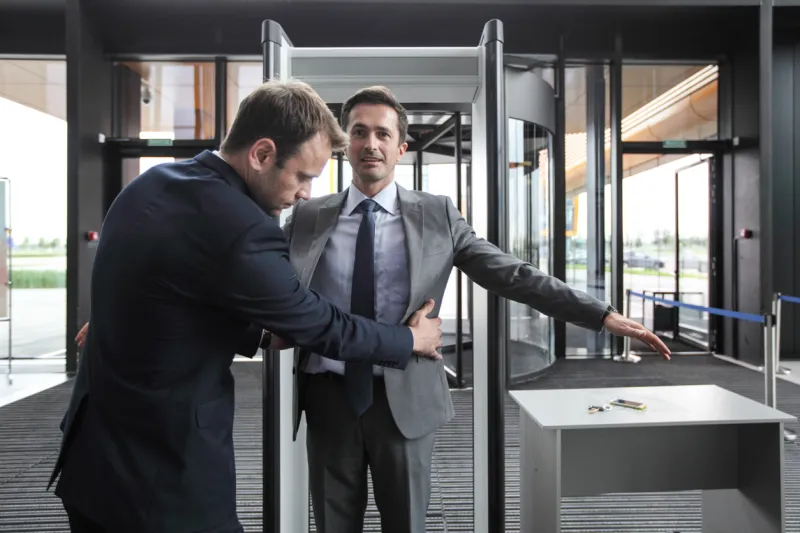
Photo: professional security personnel at corporate event entrance checking credentials, via www.macc.com
A grand opening draws hundreds of unfamiliar faces through your doors. A trade show places your key personnel and proprietary materials in an unfamiliar venue surrounded by competitors and the general public. A corporate gala concentrates your leadership team, your most important clients, and your brand reputation in a single location for several hours.
Each of these scenarios shares a defining characteristic: your security exposure is dramatically elevated, and the window for mistakes is narrow.
Yet a significant number of US businesses treat special events as logistical challenges rather than security challenges — focusing on catering, signage, and guest lists while leaving protection protocols as an afterthought. The consequences of that oversight can range from embarrassing to catastrophic.
The following checklist is designed to help business leaders and event coordinators build a structured security approach for high-visibility occasions, from the planning phase through post-event assessment.
Phase One: Pre-Event Security Planning
Effective event security begins weeks — not hours — before the first guest arrives. The planning phase establishes the foundation upon which every subsequent decision rests.
✔ Define the threat landscape specific to your event. Not all events carry the same risk profile. A retail grand opening in a high-foot-traffic urban corridor presents different challenges than a private executive summit at a hotel conference center. Identify the specific threats relevant to your event type: theft, unauthorized access, crowd surges, media intrusion, protest activity, or targeted threats against specific individuals.
✔ Conduct a venue security assessment. Whether the event is held at your own facility or an external venue, a physical walkthrough with security leadership is essential. Identify all entry and exit points, assess lighting adequacy, locate emergency equipment, evaluate crowd flow bottlenecks, and confirm communication infrastructure. Document everything.
✔ Establish a staffing plan based on attendance projections. A common error in event security planning is staffing for the expected attendance rather than the maximum possible attendance. Industry best practices suggest one trained security officer for every 50 to 100 attendees for general public events, with higher ratios for VIP-heavy or high-risk gatherings. Confirm your staffing plan against realistic projections, not optimistic ones.
✔ Coordinate with local law enforcement and emergency services. For events exceeding a certain size — typically 500 or more attendees, though thresholds vary by municipality — formal coordination with local police and fire departments is both advisable and, in some jurisdictions, legally required. Even for smaller events, an informal notification to local law enforcement ensures that first responders are aware of your event and can respond more effectively if needed.
✔ Develop and distribute a written security brief to all personnel. Every staff member — not just security officers — should receive a concise brief covering emergency procedures, communication protocols, designated assembly points, and their specific role in a crisis scenario. Familiarity with the plan before an incident occurs is the difference between an organized response and a chaotic one.
Phase Two: Access Control and Credentialing
Controlling who enters your event — and where they are permitted to go once inside — is among the most critical security functions you will manage.
✔ Implement a tiered credentialing system. Distinguish between general attendees, media representatives, vendors, staff, and VIP guests through clearly differentiated credentials: wristbands, lanyards, badges, or digital passes. Each tier should have clearly defined access permissions, and those permissions should be enforced consistently.
✔ Establish a secure check-in process. The entry point is your first and most important line of access control. Ensure that check-in is staffed adequately to prevent bottlenecks — long lines create crowd pressure and frustrated attendees, both of which complicate security management. Consider implementing bag checks or screening procedures proportionate to the event's risk profile.
✔ Designate restricted zones and communicate them clearly. Areas containing sensitive materials, executive personnel, financial transactions, or proprietary displays should be clearly demarcated and actively monitored. Signage alone is insufficient; physical barriers and assigned personnel are necessary for genuine access control.
✔ Manage vendor and contractor access separately. Delivery personnel, AV technicians, catering staff, and other vendors represent a distinct access control challenge. Issue time-limited credentials, require escort protocols for sensitive areas, and maintain a log of all vendor entry and departure times.
Phase Three: Crowd Management and On-Site Operations
Once the event is underway, security operations shift from planning to active management. The following measures support safe, orderly crowd dynamics throughout the event.
✔ Station personnel at all entry, exit, and transition points. Security officers positioned at choke points — entrances, stairwells, restroom corridors, and stage or presentation areas — provide both deterrence and rapid-response capability. Their visibility is itself a security asset.
✔ Establish a command post with clear communication channels. A centralized command presence — even a designated table with radio communication — allows security leadership to monitor conditions across the venue and coordinate responses without confusion. All personnel should know where the command post is located and how to reach it.
✔ Monitor crowd density in real time. Crowd surges are among the most underestimated risks at public events. Assign personnel to monitor density at key areas and establish thresholds at which entry will be paused or redirected. Do not wait for a crowd situation to become dangerous before intervening.
✔ Implement VIP protection protocols. If executives, public figures, or high-profile clients are attending, assign dedicated security personnel whose sole responsibility is their protection. Establish arrival and departure routes in advance, identify secure holding areas, and brief VIP principals on emergency procedures.
Phase Four: Emergency Response Readiness
✔ Confirm medical coverage is in place. At minimum, a trained first aid responder should be on-site for any event exceeding 100 attendees. Larger events may require on-site EMTs or coordination with a local ambulance service. Confirm the location of the nearest emergency room and ensure at least one staff member has that information readily accessible.
✔ Establish and communicate evacuation procedures. Evacuation routes should be mapped, clearly marked, and verbally communicated to all personnel before the event begins. Conduct a walkthrough of evacuation paths with your security team. Assign specific personnel to assist guests with mobility limitations.
✔ Define the activation threshold for emergency protocols. Ambiguity about when to escalate a situation to an emergency response is dangerous. Establish clear criteria — a medical emergency, a physical altercation, a credible threat — and ensure all personnel understand the escalation chain.
Phase Five: Post-Event Vulnerability Assessment
The event's conclusion does not mark the end of your security responsibility.
✔ Conduct a post-event security debrief within 48 hours. Gather security personnel, event coordinators, and relevant leadership to review the event's security performance. Identify any incidents, near-misses, or procedural gaps. Document findings formally.
✔ Audit access control records. Review credential logs, entry and exit records, and any anomalies flagged during the event. Confirm that all temporary credentials have been deactivated and that no unauthorized access occurred.
✔ Assess whether the event created residual vulnerabilities. Large events sometimes leave behind conditions that create ongoing risk: damaged access points, compromised surveillance coverage, or publicly disclosed information about your facility's layout. Address these issues before resuming normal operations.
Preparation Is Protection
Special events are moments of opportunity — for your business, for your clients, and for those who would take advantage of elevated exposure and reduced vigilance. The difference between an event remembered for its success and one remembered for its security failure often comes down to the quality of preparation that preceded it.
Alert Guarding Force provides comprehensive event security services tailored to the specific demands of trade shows, corporate gatherings, grand openings, and executive functions across the United States. Our teams bring structured planning, professional execution, and the experience to manage the unexpected — so your next event is defined by what you intended it to be.