Where the Next Dollar Goes: Ranking Security Spending for the Small Business Owner

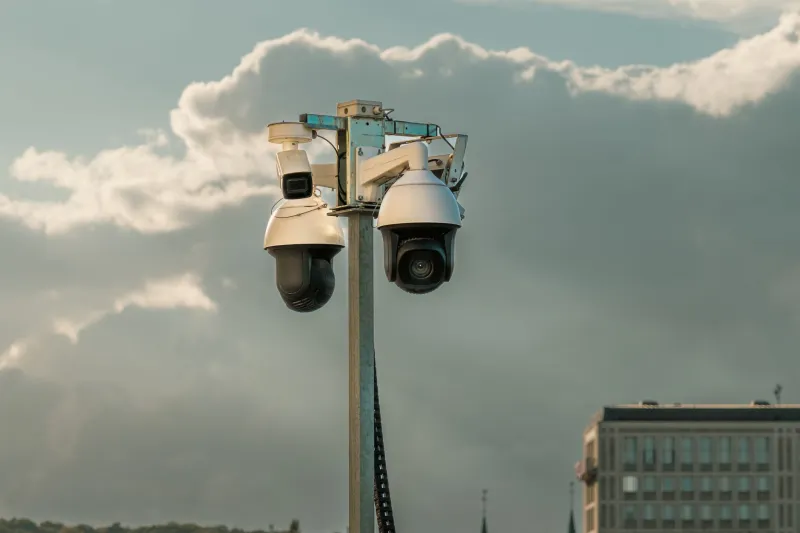
Photo: JoachimKohler-HB, CC BY-SA 4.0, via Wikimedia Commons
If you own a restaurant in Ohio, a auto shop in Arizona, or a boutique in Austin, you have probably stood in front of a security vendor's proposal and wondered the same thing every small business owner wonders: is this the spending that actually protects me, or just the spending that looks like protection?
Having evaluated security programs across hundreds of small commercial properties, we can tell you that the ranking rarely matches the marketing budget of the products being sold. Below is our honest ordering, from highest value per dollar to lowest.
1. Lighting and Locks (Under $500)
Unsexy, unbeatable. A deadbolt that actually engages, a door frame reinforced with longer screws, and bright, motion-activated exterior lighting eliminate the two conditions most burglaries require: darkness and a quick, quiet entry. Most break-ins at small US businesses are crimes of opportunity against the weakest building on the block. Your goal is simply to not be that building.
2. An Audible Alarm—Monitored (Roughly $30–$60 per Month)
A loud siren cuts an intruder's time on site to nearly zero, and professional monitoring means someone responds even when your phone is off. The deterrence value of signage alone is well documented. Skip the ultra-cheap self-monitored-only systems if you cannot guarantee you'll answer a 3 a.m. alert; an unmonitored alarm is a noise complaint waiting to happen.
3. Good Cameras, Placed Where They Matter (Several Hundred Dollars)
Cameras earn their keep in two ways: deterring the casual thief and giving police a usable lead afterward. But placement beats pixel count. Cover the entrance, the register, the rear door, and the blind side of the building. A 4K camera pointed at a blank wall is a paperweight. And critically—test the footage retrieval process before you need it.
4. Access Discipline (Free to Nearly Free)
Re-keying locks when an employee leaves, retiring shared gate codes quarterly, and requiring keys to be returned on the last day cost almost nothing. Yet stolen or never-returned credentials are among the most common entry methods in small-business theft. This is the highest-return habit on the list and the most commonly skipped.
5. A Guard Presence—Part-Time or Event-Based (Hourly Contract)
For most small businesses, a full-time guard contract is hard to justify on pure loss prevention. But targeted use is a different story: a guard during inventory season, a marked presence during the holiday retail rush, or coverage during a known vulnerability window (a move, a renovation, a publicized closure) delivers deterrence that no device can match. A uniformed professional changes behavior in a way a camera never will.
6. Full-Time Guard Coverage (Monthly Contract)
Valuable in the right context—high-value inventory, chronic after-hours problems, sites with heavy foot traffic—but often purchased for reassurance rather than need. If you go this route, insist on defined post orders, supervision, and reporting. An unsupervised guard post is an expensive way to relocate your risk from the building to the invoice.
The Bottom Line
Notice what sits at the top of the list: hardware that costs less than a nice dinner and habits that cost nothing. Notice what sits at the bottom: the items with the glossiest brochures. Security spending should be sequenced—harden the basics first, then add layers as your risk profile genuinely demands them. Every dollar spent on lighting and locks is a dollar that doesn't need to be spent recovering from a loss the cheap fixes would have prevented.