The Appearance of Safety: A Practical Framework for Evaluating Whether Your Security Program Actually Works
When Looking Secure and Being Secure Are Not the Same Thing
Security, at its worst, is a performance. Cameras mounted where visitors can see them. Guards stationed at the entrance during business hours. Badges required at reception. Each of these elements signals protection. None of them, in isolation, constitutes it.
The term "security theater" has entered professional discourse for a reason. It describes a recognizable pattern: organizations investing in visible security measures while leaving substantive vulnerabilities unaddressed. The performance satisfies auditors, reassures clients, and creates the appearance of diligence. What it does not do is stop determined threats.
For business owners who want to know whether their current security program belongs in this category, the answer is rarely obvious — and it is almost never provided voluntarily by the vendor being evaluated.
Why Security Providers Are Not Positioned to Audit Themselves
Asking your security company whether it is doing a good job is not a useful exercise. It is the equivalent of asking a contractor to inspect their own work. The incentives are misaligned, the blind spots are structural, and the results are predictably favorable.
This is not an accusation of dishonesty. It is a description of a systemic problem. Security providers measure performance using metrics they define, benchmarks they set, and reports they generate. When the same entity controls the assessment criteria and produces the assessment, the output is not an audit — it is a summary.
Meaningful evaluation of a security program requires external perspective, defined standards, and a willingness to find problems. Business owners who wait for their provider to identify deficiencies are often the last to learn about them.
What a Genuine Security Walkthrough Looks Like
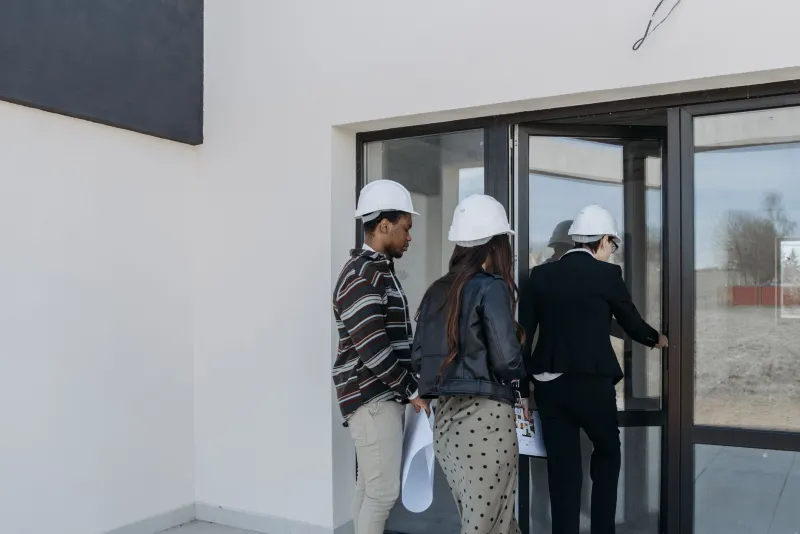
Conducting your own security assessment does not require specialized credentials. It requires structured observation, honest documentation, and the discipline to record what you actually see rather than what you expect.
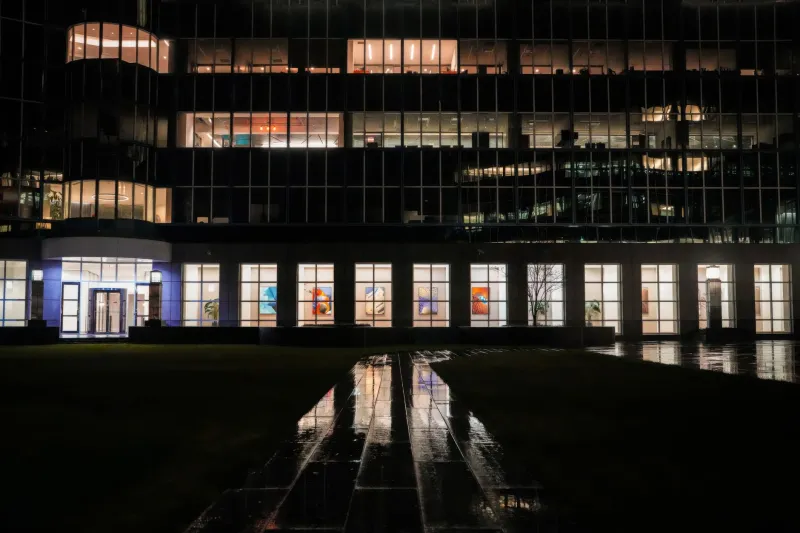
Begin with access points. Walk every entrance and exit during different hours — not just during the business day when guards are most attentive and staffing is at its peak. Assess what happens at the loading dock at 6:00 a.m. Observe the parking structure after 9:00 p.m. Note whether protocols are applied consistently or whether they relax when volume is low and oversight is absent.
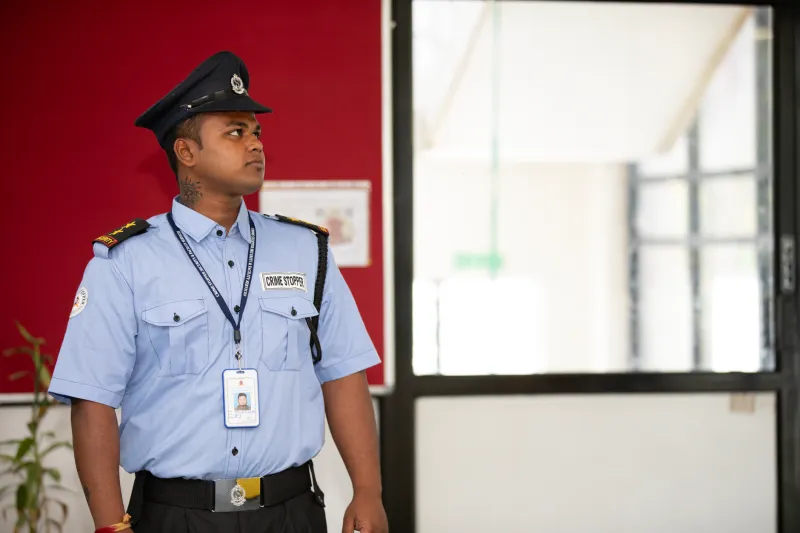
Observe guard behavior without announcing your presence. Are posts occupied? Are guards engaged with their environment or absorbed in personal devices? When a guard is stationed at an entry point, are they making genuine contact with individuals entering the facility, or waving people through without verification?
Review your camera system with fresh eyes. Map your camera positions against your site layout and identify areas where coverage lapses. Determine whether recorded footage is actually being reviewed — and how quickly an incident would be identified if no alarm was triggered.
Finally, test your incident response protocol. Submit a low-stakes scenario — an unauthorized vehicle in a restricted area, a tailgating event at a secure entrance — and measure how quickly it is detected, reported, and resolved. The response time and documentation quality will tell you more about your program's effectiveness than any formal review.
Red Flags That Signal Performance Over Protection
Certain patterns appear consistently in security programs that prioritize appearance. Recognizing them requires no expertise — only attention.
Metric reporting that never shows problems. If your monthly security reports contain no incidents, no near-misses, no protocol deviations, and no recommendations for improvement, the reports are not reflecting reality. Genuine security operations generate observations, anomalies, and improvement notes. Uniformly positive reporting is a sign that the program is managed for client satisfaction rather than operational accuracy.
Guard assignments that correlate with visibility rather than risk. If your most prominent post — the main lobby, the front entrance — is always staffed while lower-visibility areas receive inconsistent coverage, your provider may be optimizing for the impression of security rather than its distribution.
Resistance to unannounced reviews. A security provider that discourages or complicates surprise inspections is protecting something. Reputable firms welcome unannounced walkthroughs because they demonstrate confidence in consistent performance.
Vague responses to specific questions. When you ask your provider how long it would take to detect an unauthorized entry in a specific zone, you should receive a specific answer. Generalities and deflections suggest that the protocols either do not exist or have not been tested.
A Practical Evaluation Checklist
The following questions are designed for direct use during a self-conducted security review:
- Are all entry points covered during every operational hour, including non-peak periods?
- Can your guard team demonstrate, in real time, how they would respond to a defined emergency scenario?
- Are camera blind spots documented, and is there a protocol in place to compensate for them?
- Does your incident log contain entries that reflect genuine operational observations, or is it primarily blank and exception-free?
- Has your provider conducted a vulnerability assessment of your facility within the past twelve months?
- Are guard posts subject to any form of supervisory verification — scheduled or random — during each shift?
- Does your contract include measurable performance standards, and are those standards being tracked?
A security program that cannot answer these questions confidently is not a program built for effectiveness. It is a program built for retention.
The Standard That Genuine Protection Requires
Security substance does not announce itself. It operates in the margins — in the guard who notices something unusual and reports it before it escalates, in the camera system that covers the corner nobody thought to check, in the protocol that holds at 2:00 a.m. exactly as it does at 2:00 p.m.
The businesses best protected are those whose owners ask the hard questions before an incident forces the answers. An honest evaluation of your current program — conducted by your own team, without notice, using the criteria above — is one of the highest-value security investments you can make. It costs nothing except the willingness to look clearly at what is actually there.