The Minutes Nobody Owns: Closing the Security Gaps That Open Every Time a Guard Rotation Occurs
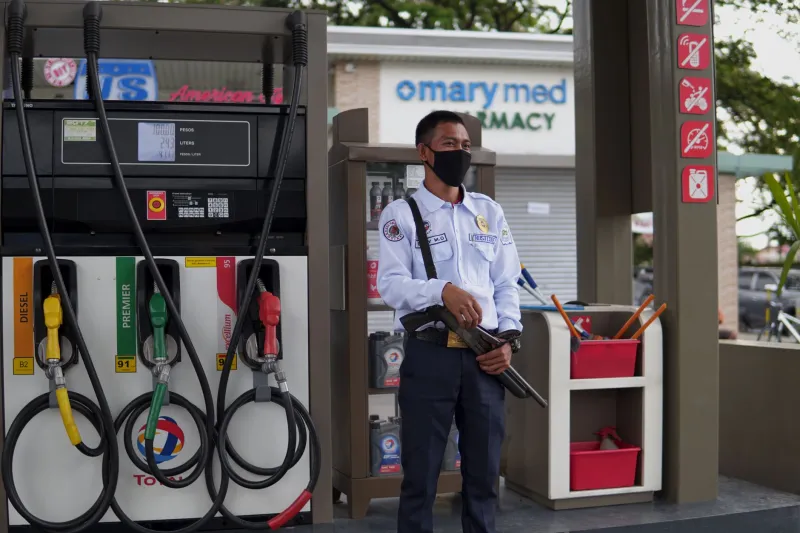
The Window That Criminals Have Already Mapped
Professional security planning tends to focus on the obvious: camera placement, access control systems, after-hours protocols, and emergency response times. What receives far less scrutiny is a recurring operational moment that occurs multiple times every single day at nearly every guarded facility in the country—the shift change.
Guard rotations are logistical necessities. Personnel cannot work indefinitely, and relief cycles are a fundamental feature of any staffing model. But necessity does not eliminate risk. In fact, the very predictability of shift transitions makes them attractive targets. Individuals who wish to exploit a facility's defenses do not need sophisticated intelligence-gathering capabilities to identify when a handoff is occurring. They need only patience and a basic understanding of how security operations are structured.
The problem is not that shift changes happen. The problem is that most organizations treat them as administrative events rather than security-critical moments requiring their own dedicated protocols.
Why the Handoff Is Structurally Vulnerable
To understand the risk, consider what is actually happening during a typical guard rotation. The outgoing officer is mentally transitioning out of operational mode—they are fatigued, focused on completing their shift log, and preparing to depart. The incoming officer is still orienting—reviewing notes, adjusting to environmental conditions, and establishing situational awareness they have not yet earned through hours of observation.
For a window that may last anywhere from five to twenty minutes, neither officer is fully present in the way that effective security demands. The outgoing guard's attention is divided. The incoming guard's awareness is incomplete. Communication between the two is often rushed, abbreviated, and verbally transmitted in ways that make critical details easy to miss or misremember.
This is not a failure of individual personnel. It is a structural vulnerability embedded in how most shift transitions are designed and executed. When no one has clearly defined accountability for the space between rotations, that space becomes, functionally, unowned.
What Breaks Down During Transitions
Three specific failure modes tend to emerge during poorly managed shift changes, each capable of creating meaningful security exposure on its own.
Situational awareness gaps. An outgoing officer may have been monitoring a specific individual loitering near a delivery entrance or tracking an unfamiliar vehicle that circled the parking lot twice in the past hour. If that intelligence is not clearly communicated—and understood—by the incoming officer, it disappears entirely. The incoming guard begins their shift without the contextual picture their predecessor had developed. This is not a minor inconvenience. It is a reset of institutional knowledge that bad actors can deliberately exploit by timing their approach to coincide with a handoff.
Physical coverage lapses. Depending on how a facility is structured, the act of physically transitioning from post to post can leave certain areas temporarily unmonitored. A guard walking from the security station to the perimeter checkpoint to relieve a colleague is not watching either location with full attention. In larger facilities with multiple posts, these physical gaps can be significant.
Documentation failures. The shift log is the institutional memory of a security operation. When handoffs are rushed, log entries become incomplete. Incidents that occurred near the end of the outgoing shift may be noted hastily or omitted entirely. Patterns that would be visible across multiple shifts—a recurring suspicious vehicle, a door that has been propped open repeatedly—become invisible when the documentation connecting them is absent.
The Adversarial Perspective
It is worth stepping outside the operational frame for a moment and considering how this vulnerability appears to someone seeking to exploit it.
A determined individual casing a facility will observe its rhythms over time. Shift changes follow predictable schedules. The physical behavior of transitioning personnel—the brief gathering near the guard station, the outgoing officer heading toward the exit, the incoming officer still reviewing paperwork—is visually distinctive. Even without precise knowledge of a facility's internal protocols, an experienced observer can identify the transition window with reasonable accuracy.
Historically, incidents ranging from cargo theft to unauthorized access have been timed to exploit exactly these moments. The pattern is consistent enough that it should inform how every security operation approaches its rotation protocols.
Building a Transition Protocol That Eliminates the Gap
The solution is not to make shift changes faster. Speed, in this context, trades one problem for another. A rushed handoff reduces the transition window but also reduces the quality of information transfer, which can leave the incoming officer less prepared than if the process had been conducted properly.
The solution is to make shift changes deliberate—structured in a way that maintains coverage, ensures knowledge transfer, and eliminates the unowned minutes that create vulnerability.
Overlap, not succession. Wherever staffing resources permit, incoming and outgoing officers should share a defined overlap period—typically fifteen to thirty minutes—during which they are both actively present at the post. The outgoing officer conducts a formal verbal briefing covering active concerns, anomalies observed during the shift, and any open items requiring follow-up. The incoming officer asks clarifying questions before the outgoing officer departs. At no point during this period is the post unmanned.
Standardized handoff checklists. Verbal briefings are necessary but insufficient. Critical information should be documented and confirmed in writing. A structured handoff checklist—covering post status, recent incidents, flagged individuals or vehicles, equipment functionality, and outstanding tasks—creates an accountability trail and reduces the likelihood that key details are omitted under the pressure of a shift-end.
Radio continuity protocols. During the transition period, radio discipline should be explicitly maintained. Both the outgoing and incoming officers should remain on channel, and any communications from dispatch or other posts should be acknowledged by the incoming officer to confirm they are operationally active.
Staggered rotations at multi-post facilities. In facilities with multiple security posts, rotating all personnel simultaneously creates a facility-wide vulnerability window. Staggering rotations by post—so that not all positions are in transition at the same time—ensures that coverage continuity is maintained across the facility even as individual posts cycle through their handoffs.
Supervisory verification. A shift supervisor or security manager should periodically observe transition procedures to verify that protocols are being followed, identify drift in execution, and provide corrective guidance before procedural shortcuts become embedded habits.
The Discipline That Protects the Whole Operation
Alert Guarding Force operates on a foundational principle: the quality of a security operation is not measured by its best moments, but by its most consistent ones. Shift changes happen multiple times daily, across every facility, throughout the year. The cumulative exposure created by poorly managed transitions is substantial—and entirely preventable.
Investing in transition protocols is not a luxury reserved for high-security environments. It is a baseline professional standard. Every facility that employs security personnel deserves a rotation framework that treats the handoff as the critical operational moment it genuinely is.
The minutes between guards should not belong to anyone who happens to be watching and waiting. With the right protocols in place, they belong to your security operation—just like every other minute of the day.

